The first reliable information about Armenians in Italy dates back to the 6th century, when Armenian garrisons were transferred to Ravenna under the leadership of the Byzantine general Nerses, an Armenian himself.
In 555, he became the exarch of the Byzantine part of Italy. The Byzantine garrison of the city, mainly consisting of Armenians, was called the numerus Armeniorum. In the first half of the 7th century, an Armenian named Isaac became the Exarch of Ravenna. His mausoleum is located in the Basilica of San Vitale and is known as the Gloria dell’Armenia (Glory of Armenia).
In the 6th-7th centuries, Armenian garrisons of Byzantium were also located in Sicily. In 668-669, Sicily was ruled by a Byzantine usurper, an Armenian named Mizizius.
The memory of the early medieval presence of Armenians here is preserved in the toponym Rocca degli armeni – the fortress of the Armenians. Another fortress, Calat al-Armani, which was conquered in 861, is mentioned here.
In one of the documents concerning the Lateran Council of 646, an Armenian monastery called Renati in Rome is mentioned. Its abbot, Thalassios, participated in the council as a representative of the Eastern Church.
In the years 1008-1010, the Byzantine catepan of Italy was an Armenian named John Kurkuas. In the 11th-12th centuries, Davino Armeno was raised to the rank of saints.
A significant Armenian community in Italy began to form in the 12th century. During this period, more than 10 Armenian churches were counted in 9 cities.
The formation of a significant Armenian colony was the result of both the Crusades and, later, the close trade relations between the Cilician Armenian Kingdom and the Italian city-states of Genoa, Venice, and Pisa.
Between 1240 and 1350, according to G. Alishan, Armenian churches existed in 25 Italian cities. In the 13th-14th centuries, about 40 Armenian churches were counted in Italy. Next to the churches, there were hospitals and houses for merchants.
An Armenian House, also known as the domus Arminorum, was founded here. It was located in Venice near St. Mark’s Square at a place called Calle dei Armini.
Already in the 14th century, an Armenian cemetery existed on the island of San Giorgio Maggiore in the Venetian lagoon.
In 1434, there were reports of an Armenian church in the center of Venice, where the liturgy was performed according to the Armenian rite. In 1512, Armenian printing was born in Italy, in the city of Venice. In the middle of the same century in this city, the publishing activity was developed by Abgar Tokhatetsi.
The most famous among the Venetian Armenians of the 16th century was the shipbuilder Anton Surian. In the 16th century, an Armenian community was formed in Livorno.
The community further multiplied in the following century, which was due to the difficult political situation in Armenia that had turned into a battlefield between Turkey and Persia.
The Grand Duke of Tuscany, Ferdinand I, in one of his documents dated 1591, invited Armenian merchants to Livorno.
At the beginning of the 17th century, about 1000 Armenians lived here. The heads of all 6 trade delegations sent from Persia to Italy during the years 1582-1610 were Armenians. In the 17th century, the Armenian Church of the Holy Cross in Venice was arranged by the funds of Kirakos Miramyan.
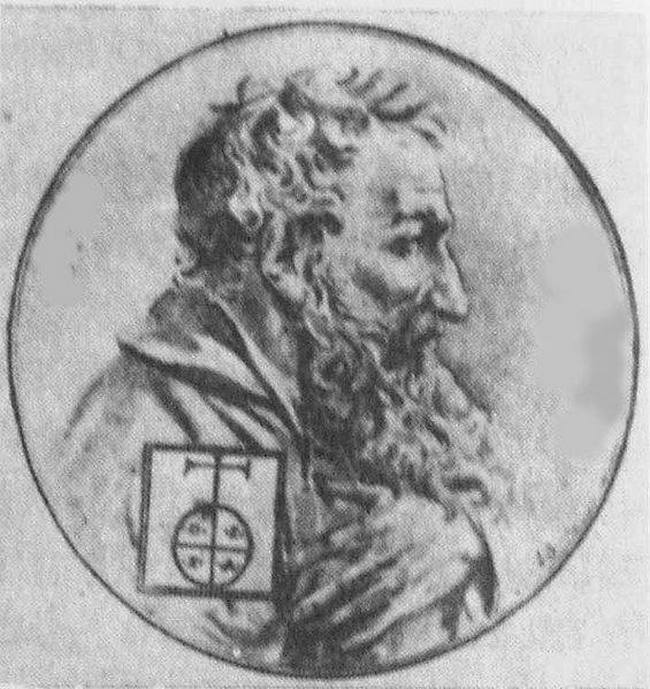
A new period in the life of Armenians in Italy is associated with the activity of the Mkhitarist Order. It was founded in 1717 in Venice, on the island of Saint Lazarus by Mkhitar of Sebastia.
During its 300-year existence, it attracted the attention of a large number of thinkers, historians, writers, becoming one of the world centers for the development of Armenology. In 1799, the Armenian magazine “Taregutyun” was published in Venice.
Among the richest people in Venice were the Armenian families of Alishanyan and Teodoryan. In addition, at that time, Armenians were the main advisors to the rulers of Venice. Some Armenian merchants were granted high titles by the Venetian Republic.
So, Grigor Agdolyants was appointed a Marquis, Sehpazyanu – a count, and Shahrimanyan, Manukyan, and Zand were knighted. From 1836 to 1996, the Murad-Raphaelian Armenian College operated in Venice. Since 1843, the magazine “Bazmavep” has been continuously published there. In 1883, the Levonyan Armenian College was founded in Rome.
It is known that in the 19th century, the great unifier of Italy – Giuseppe Garibaldi, preferred to hire Armenians for military service for their loyalty and courage. Thus, his best friend and deputy was the celebrated Armenian warrior – Gevork Ardunc.
During the Armenian Genocide, a volunteer squad was formed by Armenians from Palermo. The Armenians, taking up arms, went to save their compatriots.
Part of the squad guarded the Der-Zor corridor, another part went into service of the Armenian Legion of Honor, organized by Poghos Nubar and Vaan Kardashyan. The Armenian volunteers from Palermo fearlessly and with great ferocity and anger destroyed the regular units of the Turkish army.
By 1945, there were only about 10,000 Armenians in Italy, and by 1978, about 1,800. In 1946, a significant event occurred: Pope Pius XII bestowed the dignity of cardinal-priest with the title S. Bartolomeo all’Isola on Armenian priest Krikor Bedros Agagianian.
At the conclave of 1958, Patriarch Agagianian was one of the candidates for papal election and, as subsequently confirmed by the elected John XXIII, he almost gained the necessary number of votes for election. That same year, an Armenian church and a center for the study of Armenian culture were founded in Milan. In Milan, at the walls of the Church of St. Ambrose, a khachkar was installed as a reminder of the 1915 Armenian Genocide.
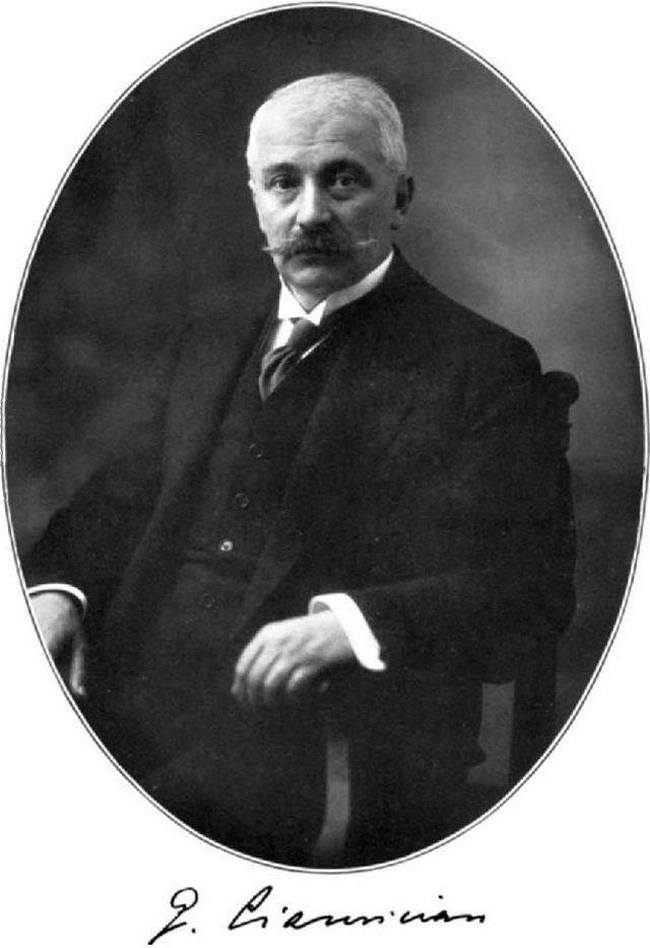
Italy was the home and place of work for the great scientist Giacomo Luigi Ciamician, renowned artist and photographer Paolo Kessedjan, Carlo Cesarini Saruhan-Bek, and the great orator Andrea Jangirian. Today, the undefeated world champion Gevorg Petrosyan – a world-renowned kickboxer and Muay Thai boxer – is a favorite among many Italians.
Giovanni Grevembroch, an Armenian merchant from Venice, lived in the 18th century. San Lazzaro degli Armeni (Saint Lazarus Island) is a small island in the southern part. Hakob Meghapart, an Armenian printer and publisher in the early 16th century, significantly contributed to the Armenian culture.
Giacomo Luigi Ciamician (August 25, 1857 – January 2, 1922) was a famous chemist of Armenian descent, who made significant contributions to the field of photochemistry.
Alexander Bakulin is an Armenian name, but I couldn’t find specific information about this person in the context of Armenians in Italy or the Armenian culture as of my training cut-off in September 2021. It would be helpful to provide more context or specifics about who Alexander Bakulin is for a more accurate response.
by Alexander Bakulin
Translated by Vigen Avetisyan
On October 1, 2026, an armed Azerbaijani soldier entered a family home in Syunik, Armenia.…
A 19th-century Baluch rug beside a 13th-century khachkar from Hovhannavank: a shared design logic, and…
A portrait from the Armenian highlands Two women stand before a painted studio backdrop of…
1. What Was Published on September 25 Aram Navasardyan, head of the Armenian branch of…
Why the topic is back in focus Over the past four months, the gas issue…
It's often assumed that the "Albanization" of Armenian heritage — the policy of declaring medieval…