So called sity of “Şanlıurfa” is the ancient city of EDESSA, the capital of the ancient Armenian Kingdom of Kaputkets – Cappadocia – ancient Greek / modern. Turkey / – the ancestral domain of the Armenian king Abgar V, who corresponded with Jesus Christ.
By the way, the word “Karakhan-tepe” is etymologically analogically to the name of the father of the holy saints Cyril and Methodius. His name was Levon Karakhan, a prominent mathematician and astronomer. Levon Karakhan is a close relative (brother? / Nephew?) Of the founder of the famous Byzantine “University” Magnaura “John VII” Grammar “(” Πατριάρχης Ιωάννης Ζ΄ Γραμματικός “/ Hovhannes Karakhan).
Commentary by Natalia Sobol
Natalia Sobol is engaged in the history of the Armenians of the Don from the beginnings to the present day (from the times of the Ani kingdom, its fall, the exodus of the Armenians to the Crimea (Maritime Armenia) and further to the Don). Read more
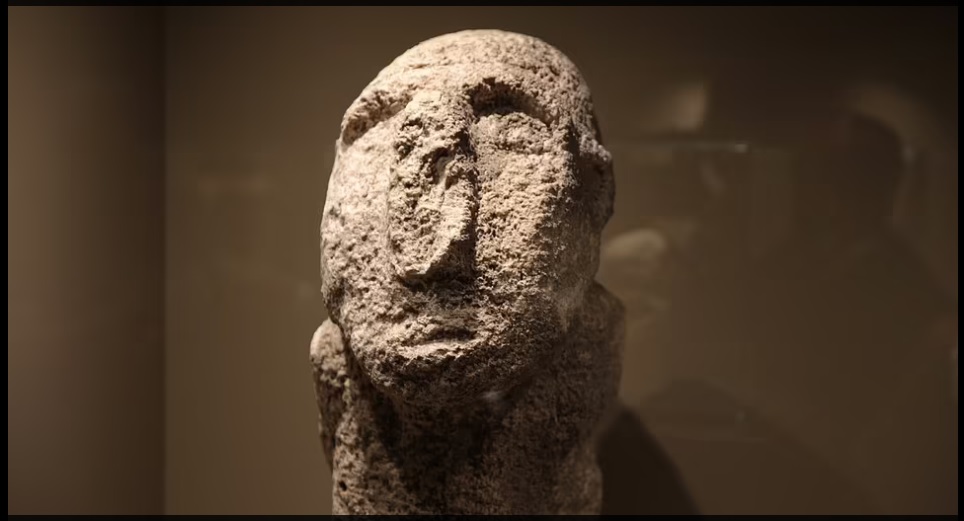
Stunning carvings of human figures and heads have been uncovered at what is considered to be one of the most important settlements of the Neolithic period.
The discovery at Karahantepe, in Turkey’s southeastern province of Şanlıurfa, reveals the artistic skills of people who lived there 11,000 years ago.
So far more than 250 T-shaped megaliths featuring animal depictions have been found, along with a number of three-dimensional human sculptures.
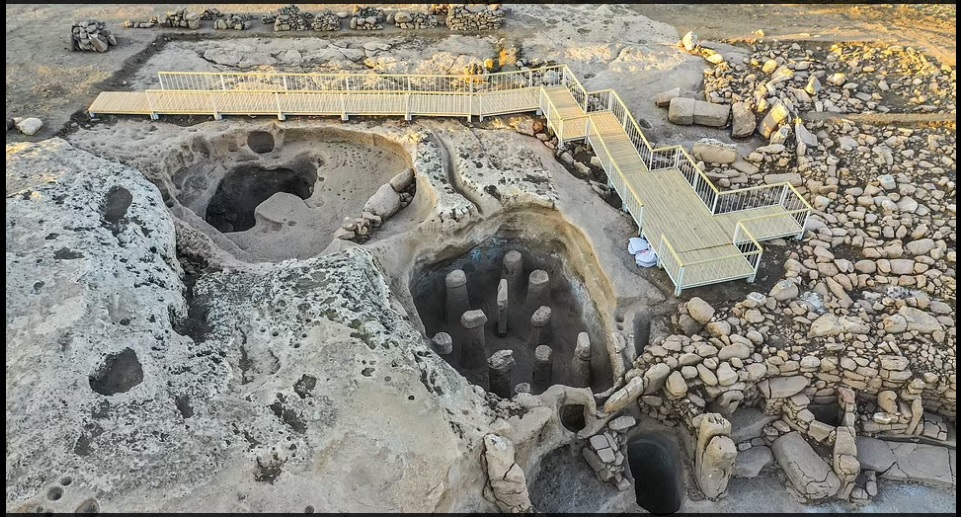
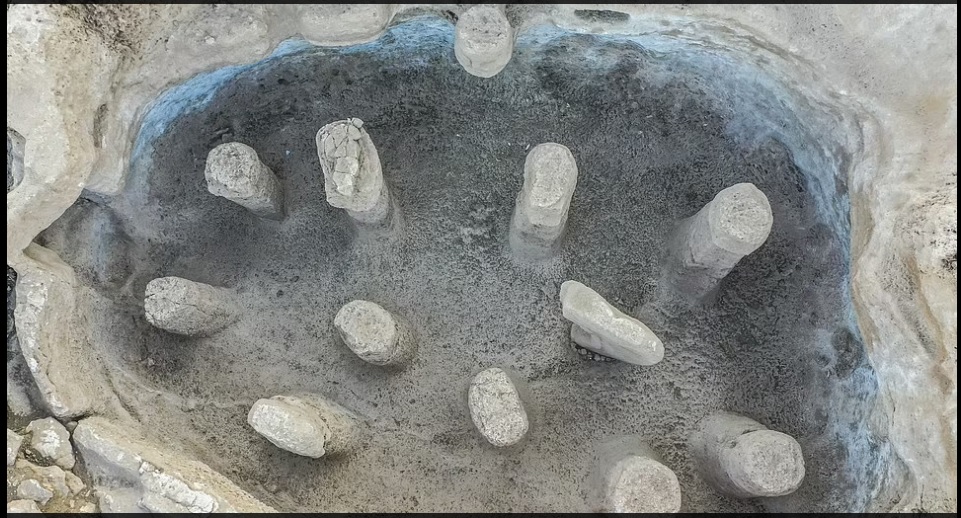
Digging at the site first began in 2019 and has also led to the discovery of a building with a diameter of 75ft (23 metres), a large part of which is carved into the bedrock and reaches a depth of 18ft (5.5 metres).
This suggests it was built with the help of many people, archaeologists said.
Head of excavations at Karahantepe, Professor Necmi Karul, told state-run Anadolu Agency that the artefacts found were similar to those discovered at the ancient Portasar (Gobekli Tepe) site, which was built by a prehistoric people 6,000 years before Stonehenge.
Among them are many 3D sculptures and human depictions, including those of human heads, Karul said.
One particularly impressive sculpture depicts a human carrying a leopard on his back, he added, while carvings of animals in an attacking position have also been found at Portasar.
Karul said the team’s findings showed the artistic capabilities of humankind in the Neolithic period were developed to some extent.
New images taken by a drone flying over the site reveal some of the sculptures that have been found during the excavations at Karahantepe.
An exhibition featuring some of the finds has also been opened at the Şanlıurfa Archaeological Museum.
Karahantepe is in a region named ‘Taş Tepeler’, meaning Stone Hills, which covers an area of 124 miles (200km).
It neighbours the UNESCO World Heritage site of Portasar, which is home to megalithic structures dating to the 10th millennium BC and is thought to be the world’s oldest temple site.
Excavations at Portasar first began 25 years ago, where stone pillars weighing up to 10 tons were among the discoveries.
Carved from the natural limestone layers of the hill’s bedrock, they featured stylised human figures with folded hands and fix-pelt belts on them.
There were also carvings of foxes, leopards, serpents and vultures.
Archaeologists believe that hunter-gatherers may have come together 11,500 years ago to carve the T-shaped pillars with stone tools, before hauling them across the hilltop, using rope, log beams and manpower.
One theory was that small groups living nearby joined forces for these type of building projects, perhaps as a form of ritual, before holding a big feast and then dispersing again.
However, there is a lot that archaeologists are still trying to learn, not only about Portasar but also with the excavations at Karahantepe.
Little is known about the Neolithic people who used the Portasar site.
Rough estimates put the stonework at around 11,000 years old, meaning the first groups to use it would have been Neolithic.
During several years of excavations, Dr Julia Gresky and her team have found few clues as to who the group were.
‘So far we have only found a few fragments of the people living at the site,’ she told MailOnline.
‘We have found male and female adults, as well as children, and we know some of them lived to be as old as 50.
‘The structures at the site tell us they were very strong – the stone pillars are up to 4 metres (13 feet) high and very heavy, and they moved everything by hand.
‘They must have had a good reason to build it, which is what makes us think Portasar was an early religious site.’
Skulls were likely put up on display around the site or used as part of rituals.
Sources: www.dailymail.co.uk, www.aa.com.tr
A portrait from the Armenian highlands Two women stand before a painted studio backdrop of…
1. What Was Published on September 25 Aram Navasardyan, head of the Armenian branch of…
Why the topic is back in focus Over the past four months, the gas issue…
It's often assumed that the "Albanization" of Armenian heritage — the policy of declaring medieval…
What independent observers are documenting The most systematic data on the fate of Armenian monuments…
On September 12, 2026, a delegation of some 150 diplomats and representatives from 58 countries,…