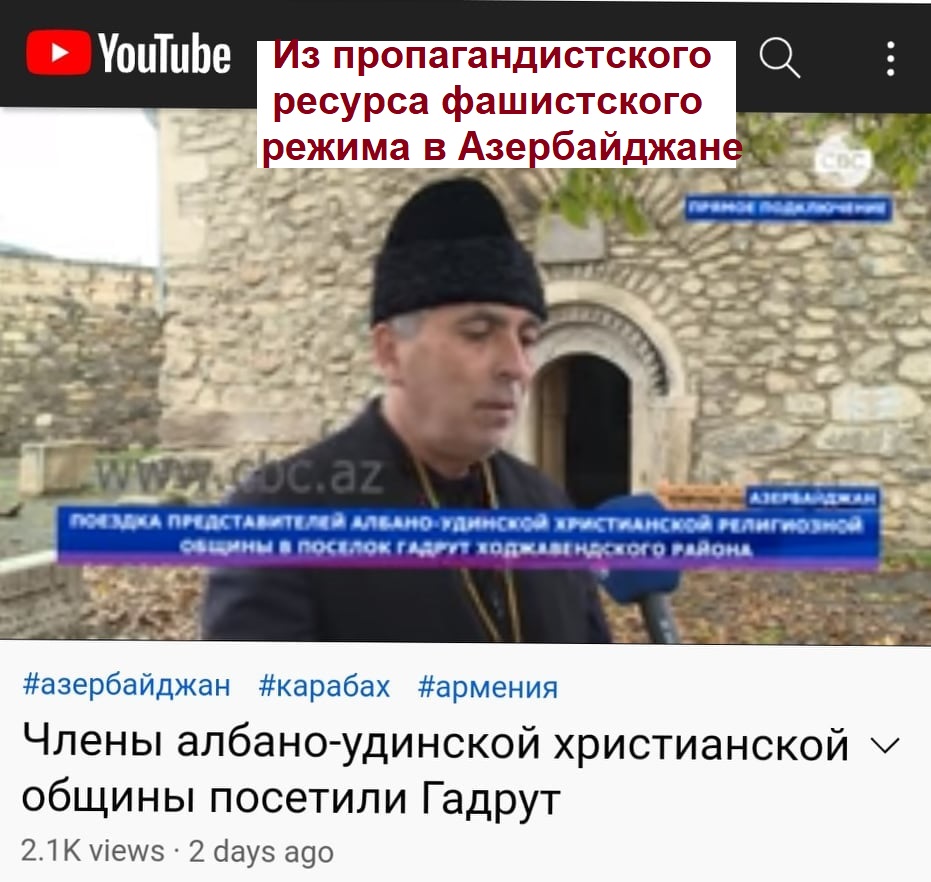
November 5, 2021 on the Azerbaijani website www. cbc. az a video was published, which again showed the “pilgrimage” of the representatives of the Udi community in the Surb Harutyun Church near the town of Hadrut, the Spitak Khach monastery in the Vank village, both are located on the occupied by Azerbaijan territory. The current head of the Udi community, Robert Mobilin, and his deputy, Rafik Danakarin, “perform rituals typical of the Aghvan-Udi church” in Armenian churches.
In an interview, Robert Mobilin, speaking about the so-called “damage” that the “Aghvan cultural heritage during the Armenian occupation” allegedly received, mentions that the Armenians allegedly put Armenian crosses on the walls of the Aghvan-Udi churches, erected khachkars, Armenian letters were added. done by erasing Aghvan traces. And he almost always adds that the churches should have their previous appearance, that is, they should not be Armenian, which causes concern.
During the interview, Robert Mobilin does not forget to thank the martyrs several times for liberating their “sacred places.”If Robert Mobilin were a true bearer of values, he would not have participated in such a fraud and would not have become a clown of the Azerbaijani circus.
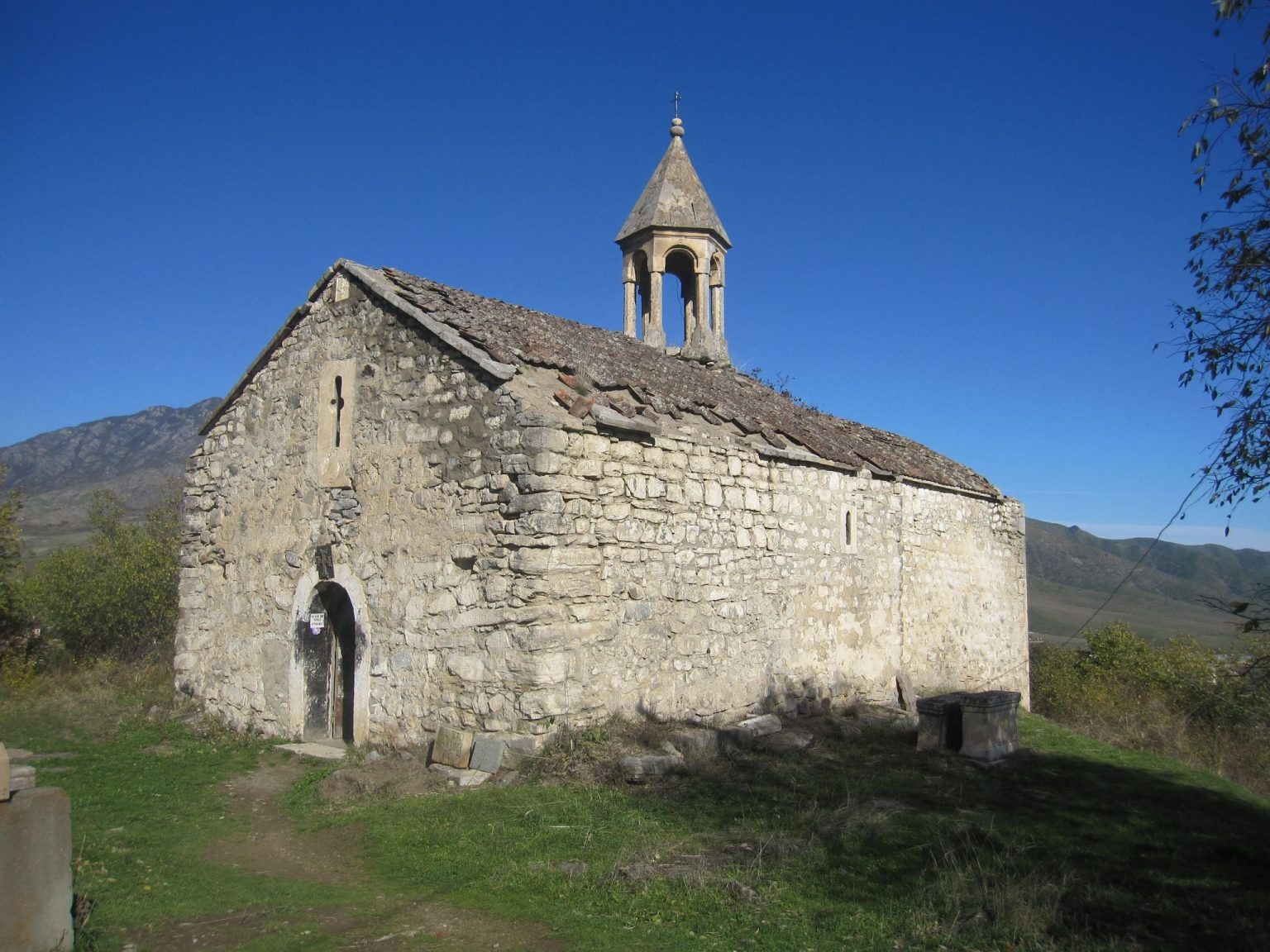
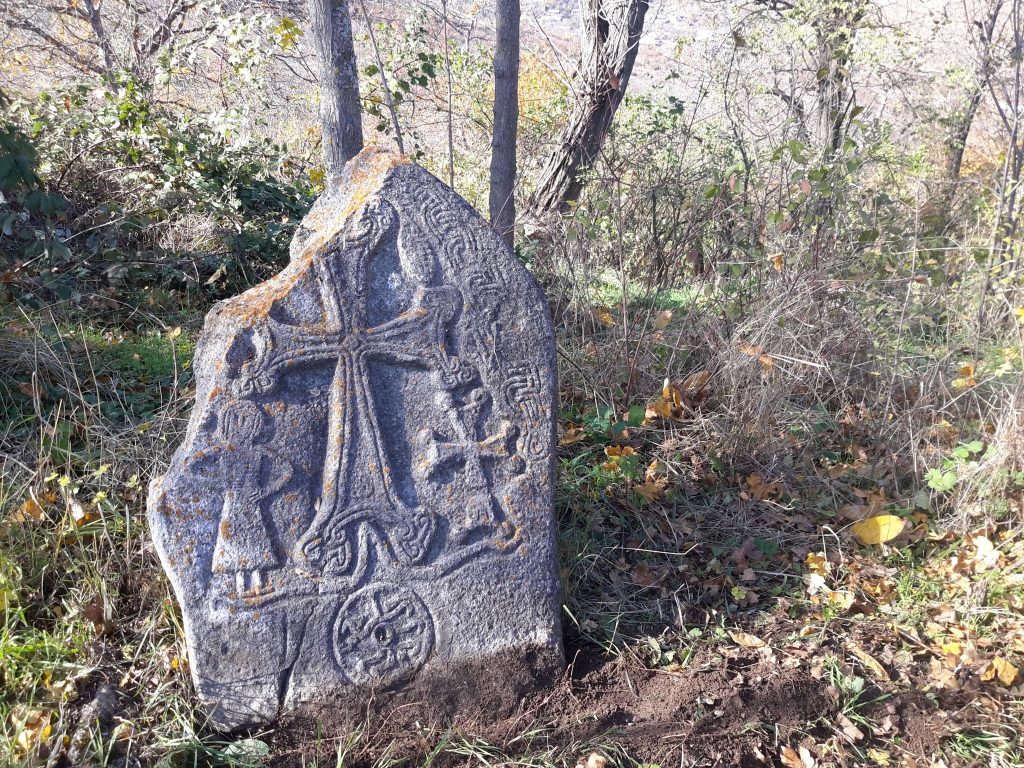
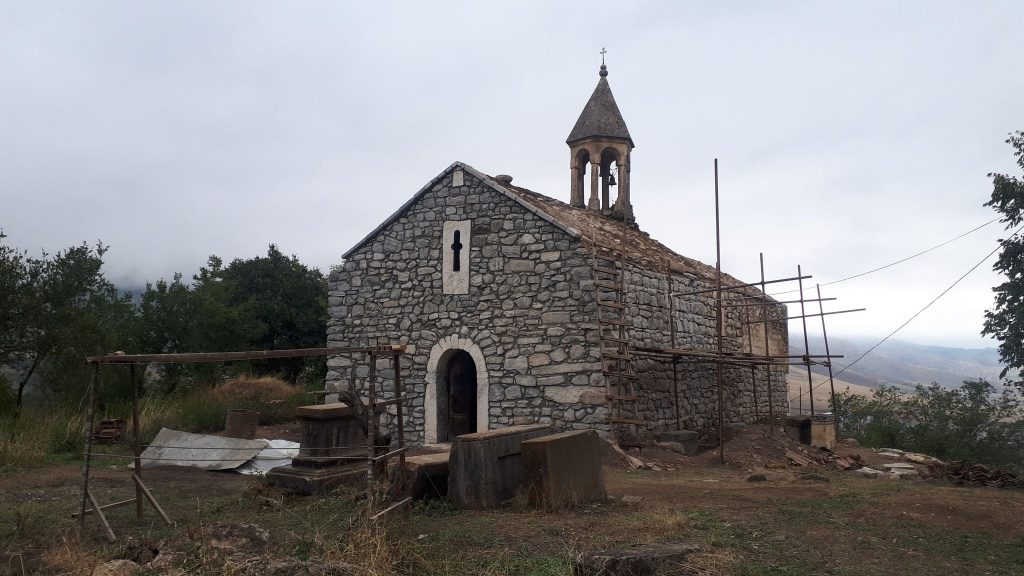
Before the war unleashed by Azerbaijan in September 2020, the Spitak Khach monastery had to be repaired with the help of an Armenian philanthropist living in the Russian Federation, Smbat Abrahamyan. By the beginning of construction work, cleaning and preparatory work was carried out, which is clearly visible on the video.
Below we provide historical data about the Spitak Khach monastery.
According to legend, the name of the monastery Spitak Khach (White Cross) is associated with the crystal cross of St. Grigoris. After his martyrdom, his patriarchal rod and crystal cross were originally kept in Amaras, where his remains were buried. After the desolation of Amaras, these relics were transferred to Gtchavank, and the crystal-white cross – to a monastery near Hadrut, from which it was named the White Cross. According to Sargis Jalalyants, a church was built here in honor of this cross, turned it into a bishopric and allocated an independent diocese. And that it became a place of pilgrimage for many Armenian pilgrims. The village got its name Vank from Spitak Khach Vank.
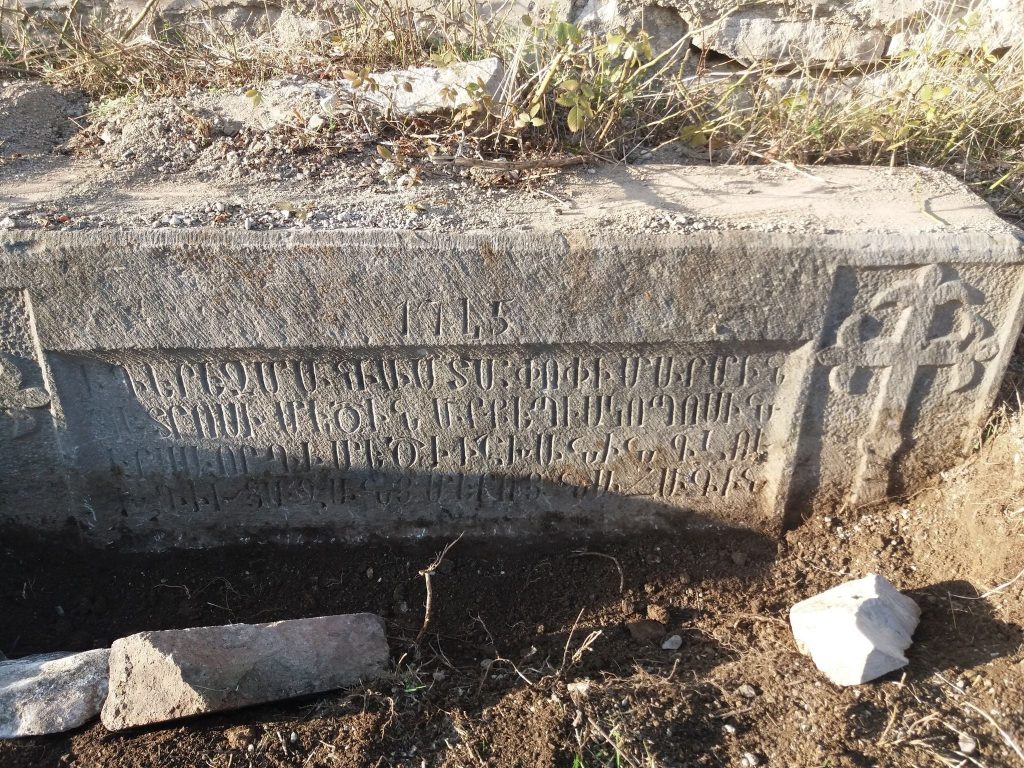
The exact date of the foundation of the monastery is unknown, the earliest inscription dates back to the 14th century, or rather to 1333. The inscription was preserved inside the church, under the khachkar of the northern arch: “ՉՁԲ” (1333).
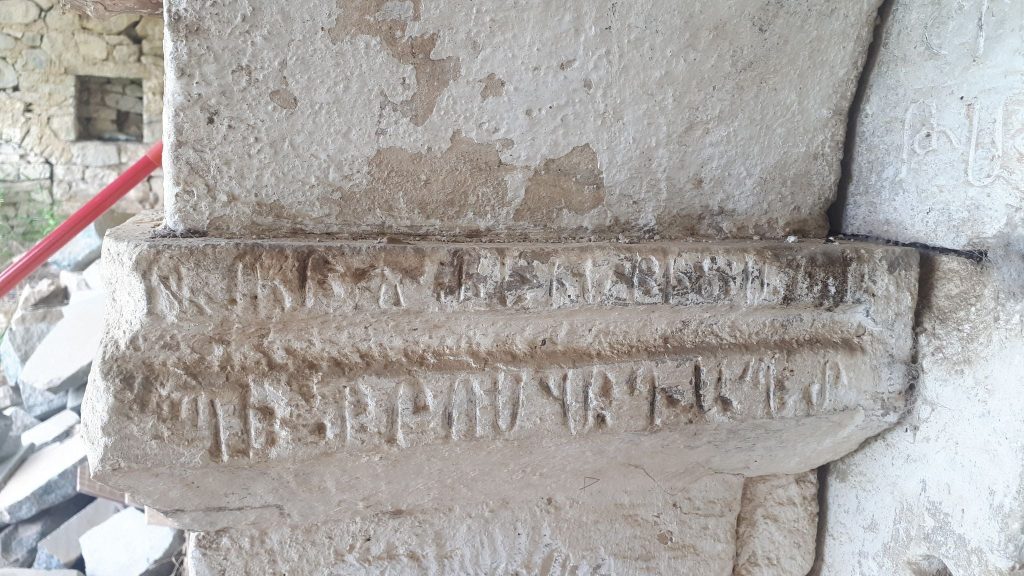
By the way, the monastery and its surroundings are rich in inscriptions, and these inscriptions speak of the further renovation of the monastery. The church is a single-nave vaulted hall with a rectangular vestibule adjoining it from the west. Moreover, the narthex and the church are not separated from each other, it has one entrance, which opens from the west. There are two small windows on the west-north side. The inscription on the stone of the western window is also preserved: “God Jesus Christ / Vrdanes T.: Ռ / ՃԽԳ” (1694).
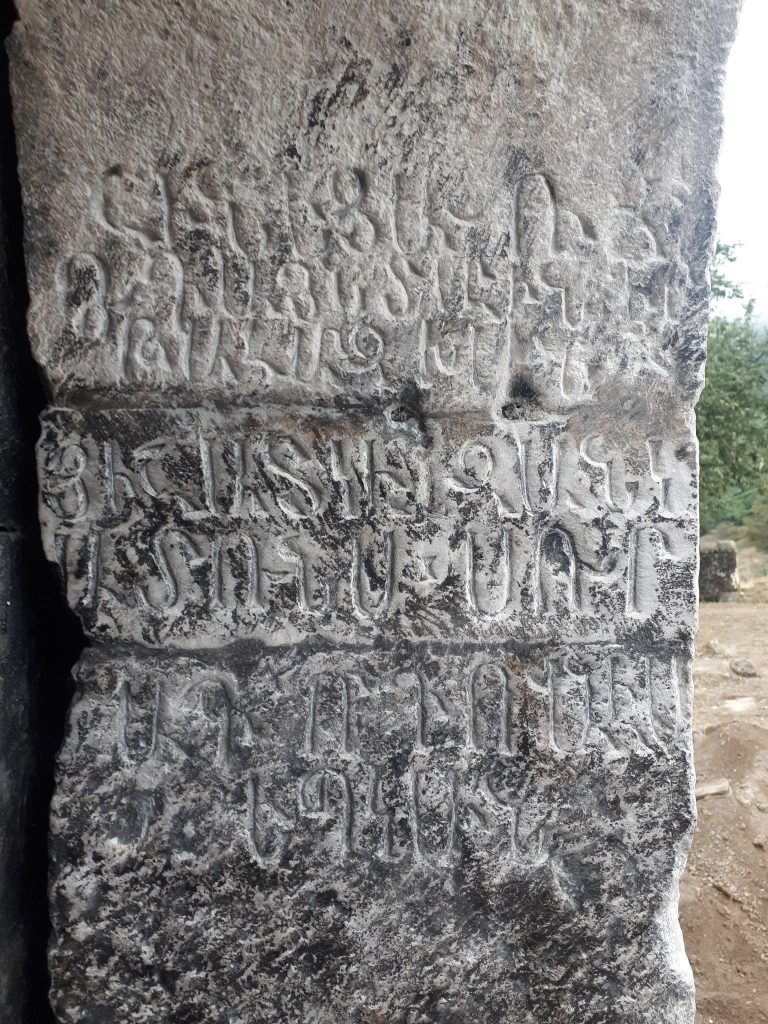
On the roof of the church there is a bell tower with a pyramidal roof, consisting of six columns – a rotunda, the construction protocol of which has been preserved on the south side of the entrance to the church: “My bell tower in memory of Bishop Hovhannes, the son of Surap”.
To the southeast of the church there is a guest house with a preserved inscription at the entrance: “I, Mkrtich, write that this was built in memory of Bishop Hovhannes, the son of Surap (1735)”. Two stone cells have been preserved near the guest house.
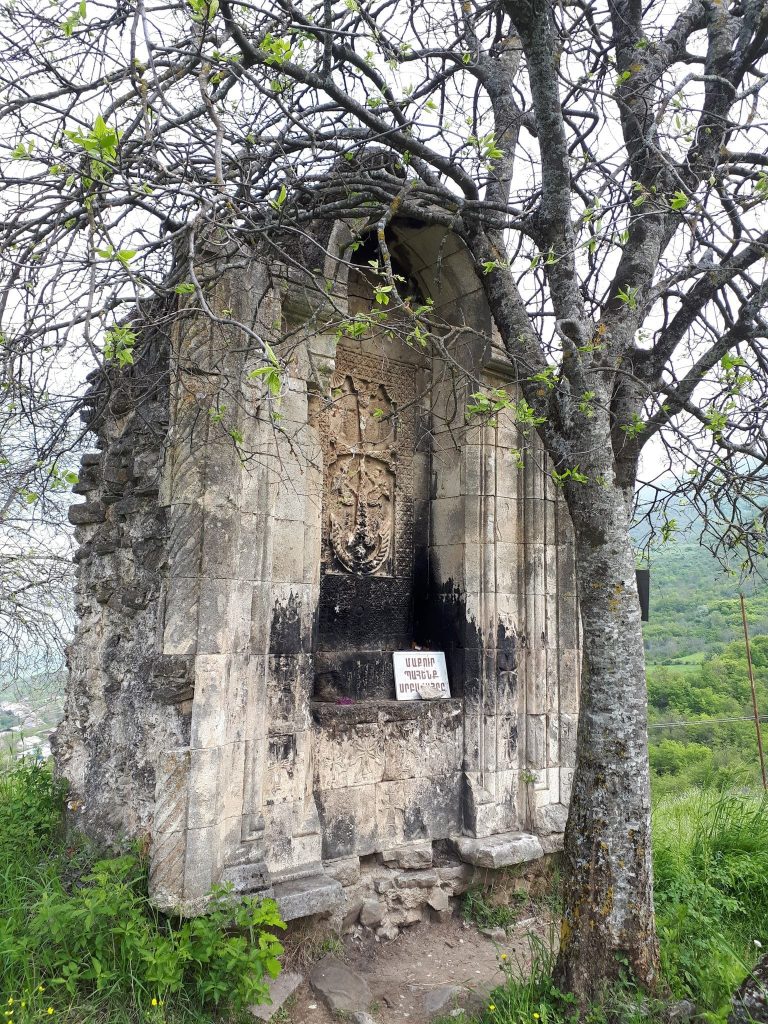
In the vicinity of the church there are many gravestones with preserved inscriptions, from which it can be assumed that the monastery was episcopal, since the bodies of bishops are buried here.It is here that one of the vormnapak khachkars (walled khachkars) of Artsakh is located.
BY AGA-TRIBUNAL Photo by Gayane Budagyan
1. What Was Published on September 25 Aram Navasardyan, head of the Armenian branch of…
Why the topic is back in focus Over the past four months, the gas issue…
It's often assumed that the "Albanization" of Armenian heritage — the policy of declaring medieval…
What independent observers are documenting The most systematic data on the fate of Armenian monuments…
On September 12, 2026, a delegation of some 150 diplomats and representatives from 58 countries,…
On September 15, 1918, the oil city of Baku fell to a joint Ottoman-Azerbaijani force,…