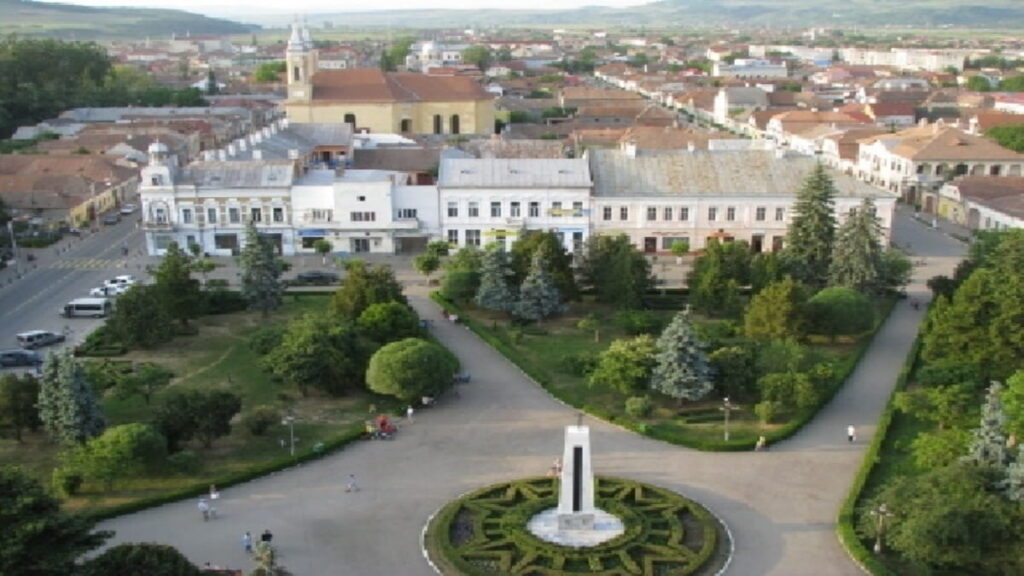
Armenopolis (modern-day Gherla, Romania) is a remarkable example of how the Armenian diaspora not only integrated into European society but actively helped shape it. Founded in the late 17th–early 18th century, the city became one of the most vivid expressions of Armenian European identity.
Foundation and Historical Context
The city was established by Armenians who migrated to Transylvania from Crimea and Moldavia in the aftermath of the 17th century.
Learn more about Gherla (Armenopolis)
It was named Armenopolis (“Armenian city”) and was essentially built anew by the Armenian community in the early 18th century.
(en.wikipedia.org)
The foundation of the city became possible thanks to privileges granted by Emperor Leopold I, who allowed Armenians to purchase land and establish their own urban center.
(uniuneaarmenilor.ro)
By the early 18th century, around 3,000 Armenians had settled there, turning the city into an important commercial and artisanal hub.
(uniuneaarmenilor.ro)
Urban Planning: A Baroque “Ideal City”
Armenopolis was designed as a planned European-style city, which set it apart from typical medieval settlements:
- a clearly structured layout,
- straight, parallel streets,
- a unified architectural vision in the Baroque style.
It is considered one of the earliest planned modern towns in Transylvania, built according to Baroque urban principles.
Read more about Baroque Gherla
(rri.ro)
This aligns with the broader European concept of the “ideal city” that spread across the continent in the 17th–18th centuries.
Status within the Habsburg Monarchy
Armenopolis became part of the Habsburg Monarchy and enjoyed significant privileges.
In 1799, it was granted the status of a “free royal city”, which meant:
- administrative autonomy,
- economic and trade privileges,
- a high degree of self-governance.
History of the Armenian community in Romania
(uniuneaarmenilor.ro)
Such a status was reserved only for the most developed and strategically important urban centers of the empire.
Economy and the Role of the Armenian Elite
Armenians in Transylvania were a significant economic force:
- engaged in international trade,
- developed crafts and manufacturing,
- contributed to the modernization of urban life.
Gherla (Armenopolis) became one of the key centers of Armenian economic activity in the region.
(rri.ro)
Education and Cultural Life
The city evolved into an important center of Armenian culture in Europe:
- Armenian schools were established,
- religious and cultural institutions flourished,
- a unique Armenian-European cultural environment emerged.
Armenopolis managed to preserve Armenian identity while integrating into the broader European cultural model.
(en.wikipedia.org)
Architecture and Heritage
The historic center of Gherla still preserves:
- its Baroque urban layout,
- 18th-century Armenian buildings,
- one of the largest Armenian cathedrals in Romania.
The city remains one of the few examples of a deliberately constructed Armenian urban center in Europe.
The Significance of Armenopolis
Armenopolis clearly demonstrates that the Armenian diaspora:
- did not merely adapt to Europe,
- but actively recreated European urban environments,
- replicating institutions, architecture, and economic systems.
This was not an isolated case, but part of a broader historical pattern of Armenian presence across Europe.
Conclusion
Armenopolis (Gherla) is more than just a historical town — it is a symbol of Armenian integration into European civilization.
It shows that Armenians in Europe were not only merchants or migrants, but also builders of complex urban, cultural, and institutional systems aligned with European standards.
Read also: Levan Tonaganyan