Reconsidering the Language and Sacred Heritage of Urartu in Armenian Historical Thought
For more than a century, the ancient kingdom commonly known as “Urartu” has occupied a central place in the historical and cultural memory of the Armenian Highlands. Academic scholarship generally classifies Urartian as a distinct Hurro-Urartian language written in cuneiform, while also acknowledging deep cultural and ethnic continuity between Urartu and the later Armenian world.
At the same time, alternative Armenian interpretations continue to emerge, arguing that the inscriptions traditionally labeled “Urartian” may preserve far deeper connections with the Armenian language and Armenian sacred tradition than mainstream scholarship currently accepts.
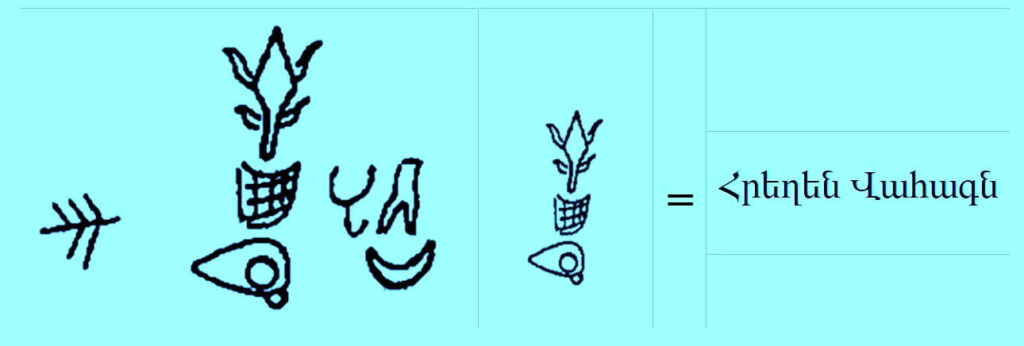
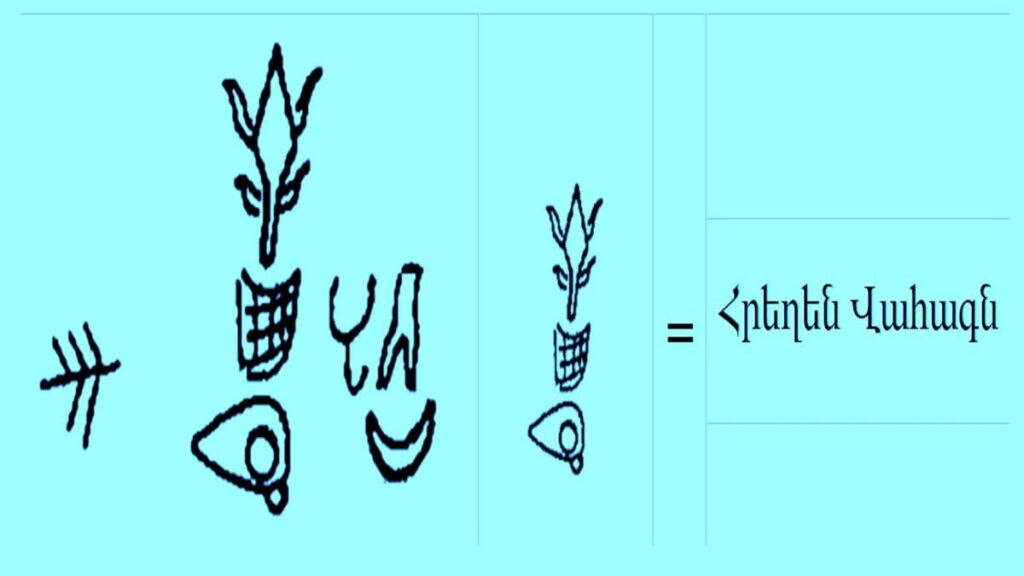
One of the most discussed contemporary Armenian researchers in this field is Hamlet Martirosyan, who proposes that the cuneiform inscriptions of the Kingdom of Ararat (Urartu) require a fundamental re-decipherment. According to his unpublished research, the accepted readings of many inscriptions are incomplete or distorted because scholars approached them through non-Armenian linguistic assumptions.
Martirosyan argues that a new methodology of decipherment allows numerous cuneiform words and ideograms to be read through Armenian phonetics and semantics. He reportedly demonstrates this method through dozens of examples, claiming that both royal and sacred inscriptions of the kingdom become intelligible in Armenian.
Urartu and the Armenian Highlands
Kingdom of Urartu emerged during the 9th century BCE around Lake Van and became one of the strongest states of the ancient Near East. Its fortresses, temples, irrigation systems, and inscriptions remain spread across the Armenian Highlands.
Modern historians generally agree that the population of the region was ethnically and linguistically complex. Many scholars believe Proto-Armenian speakers already lived within or alongside the Urartian state and gradually became dominant after its collapse in the 6th century BCE.
Some Armenian researchers go further and argue that the distinction between “Urartian” and “Armenian” has been exaggerated by modern historiography. According to these views, the state known in Assyrian sources as Urartu was fundamentally an Armenian civilization whose sacred and political vocabulary survived in later Armenian tradition.
The Debate Over the Language
Mainstream linguistics classifies Urartian as a member of the Hurro-Urartian language family, distinct from Indo-European Armenian.
However, even within conventional scholarship, researchers acknowledge extensive interaction between Urartian and early Armenian populations. Linguistic borrowing and long coexistence between the two traditions are widely accepted.
Some scholars have also noted that the written language of Urartu appears unusually limited and formulaic for a kingdom that lasted centuries. This has led to theories that the inscriptions may have represented a formal or sacred administrative language rather than the everyday spoken language of the population.
Martirosyan’s interpretation builds on this uncertainty. He argues that the inscriptions become more coherent when analyzed through Armenian linguistic structures and that many royal, religious, and geographic names correspond naturally to Armenian roots.
The Sacred Past and Historical Memory
According to this interpretation, Armenian sacred history begins to fade after the 6th century BCE — the same period commonly described by historians as the “fall of Urartu.” Later imperial influences — Iranian, Hellenistic, Roman, and eventually Christian — transformed the cultural landscape of the Armenian Highlands and altered collective memory about the pre-Christian Armenian past.
Supporters of this perspective argue that 19th- and 20th-century academic traditions often separated Armenians from the deeper antiquity of the Highlands by presenting Urartu as a foreign or unrelated civilization.
At the same time, many contemporary historians emphasize continuity rather than separation. Even scholars who reject the idea that the Urartian language itself was Armenian still recognize that the Kingdom of Urartu played a decisive role in the ethnogenesis and state formation of the Armenian people.
Kings, Gods, and the Legacy of Ararat
The religious world of Urartu was centered around powerful deities such as Khaldi, Teisheba, and Shivini, worshipped in fortified temple complexes across the Highlands.
For many Armenians today, these symbols are not viewed as relics of a vanished foreign culture, but as part of a continuous civilizational memory rooted in the Armenian Highlands themselves.
The debate surrounding Urartu is therefore not only linguistic or archaeological. It is also connected to larger questions of identity, continuity, and cultural inheritance:
Who were the builders of the fortresses of Van and Erebuni?
What language did the people of the Highlands truly speak?
And how much of Armenia’s ancient sacred tradition still survives beneath later layers of history?
These questions continue to inspire historians, linguists, archaeologists, and independent researchers alike — ensuring that the civilization of Ararat remains one of the most debated and fascinating subjects in the study of the ancient Near East.
Read also:
Encyclopaedia Britannica – Urartu
World History Encyclopedia – Urartu
Encyclopaedia Britannica – Armenian language
World History Encyclopedia – Kingdom of Urartu